Autumn in Ida-Viru County is beautiful but changeable. High humidity, frequent rain, strong winds, temperature fluctuations, and early frosts place additional strain on monuments, paving, fences, and other elements of a burial site.
To prevent the site from requiring extensive cleaning or repairs in spring, the main work should preferably be completed before persistent frost sets in. Here is how to properly prepare a burial site for winter and avoid common mistakes.
Remove Fallen Leaves Before the Snow Arrives
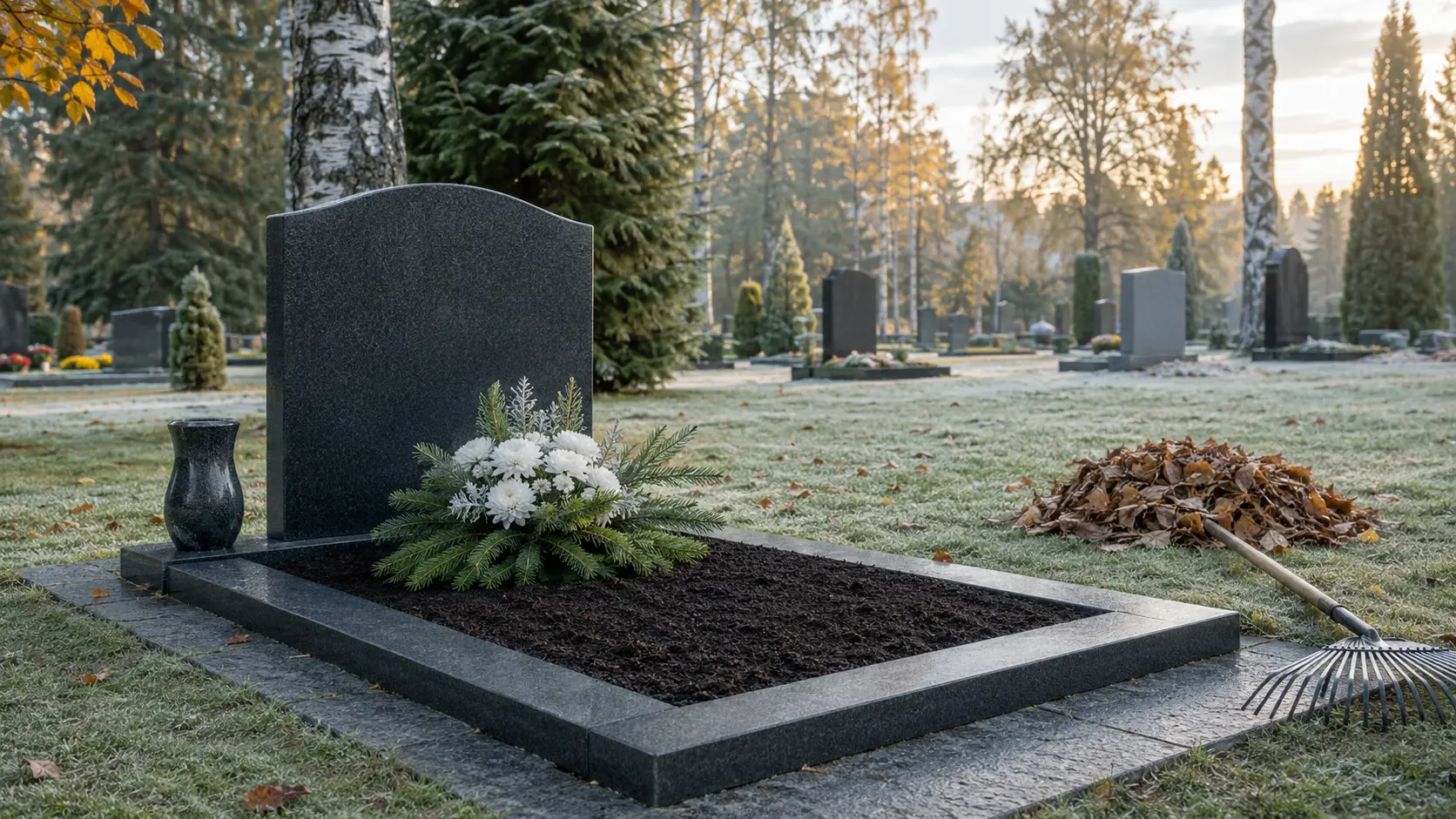
Fallen leaves, pine needles, and branches quickly accumulate near the monument, beneath benches, around the fence, and between paving elements. They should not be left there over winter.
In damp conditions, leaves begin to decompose and may leave dark marks on light-coloured stone and paving. Water becomes trapped beneath a dense layer of plant debris, causing moss and slippery deposits to form. Lawns also suffer from a lack of air and may partially rot.
During autumn cleaning, you should:
- collect leaves, branches, and rubbish;
- remove weeds together with their roots;
- clean the joints between paving stones and the area around the base of the monument;
- remove faded annual plants;
- check whether water accumulates on the site.
A clean surface free from debris dries more quickly and withstands winter temperature fluctuations better.
Inspect the Monument and Its Base
The main danger to memorial structures is not frost itself but moisture. It enters cracks, joints, and unsealed connections and expands when it freezes. Repeated freezing and thawing cycles gradually accelerate the deterioration of the stone and its foundation.
In autumn, you should check:
- the stability of the monument;
- the condition of the pedestal and foundation;
- the joints between individual elements;
- the presence of cracks and chips;
- the fastenings of decorative elements;
- the condition of the engraving and portrait.
If the monument has tilted, the foundation has subsided, or noticeable gaps have appeared between its elements, it is best to contact a specialist. Attempting to level a heavy structure yourself can be dangerous.
How to Prepare a Granite Monument
Granite is durable and well suited to Estonia’s climate, but even granite requires proper care.
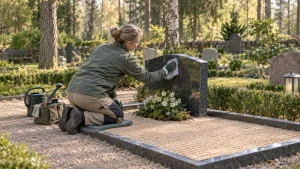
The monument can be cleaned using a soft sponge, water, and a product specifically intended for natural stone. Do not use wire brushes, abrasive powders, acids, chlorine-based products, or household cleaners of unknown composition.
After washing, rinse the surface thoroughly and allow it to dry completely. Cleaning should not be carried out during frost or shortly before freezing temperatures are expected. Recommend avoiding wet cleaning if temperatures below freezing are expected within the next 48 hours.
The entire granite surface should not be coated with varnish, wax, or a universal sealant. Protective treatment should only be applied using a product suitable for the specific type of stone and after testing it on an inconspicuous area.
Marble Requires Particularly Gentle Care
Marble is softer and more porous than granite, making it more sensitive to moisture, dirt, and improper cleaning.
Vinegar, citric acid, limescale removers, and stiff brushes must not be used on marble. They can damage the surface, alter its colour, and make inscriptions less distinct.
If cracks, flaking, deep stains, or signs of deterioration have already appeared on the monument, it is best not to wash it yourself and to seek advice from a specialist.
Water-repellent treatment is not suitable in every case. The product must be intended for outdoor use and suitable for the specific type of marble. Before application, the surface must be clean and completely dry.
Do Not Leave Water in Vases
Stone and metal vases must be emptied of water, soil, leaves, and old flowers. Water expands when it freezes and may damage the vase or its fastening.
Removable containers are best taken away for storage. Permanent vases can be covered with a suitable cap to prevent precipitation from entering. No water should remain inside.
Wrapping the entire monument tightly in plastic is not recommended. Condensation may accumulate beneath the covering, while wind may damage it and scratch the polished surface.
Prepare the Flower Bed and Decorative Gravel
Faded annual plants should be removed together with their roots. Perennial plants can be trimmed and prepared for winter according to the requirements of the particular species.
Decorative gravel or stone chippings should be cleared of leaves and weeds and then levelled. If the layer has noticeably thinned or become mixed with the soil, a small amount of additional material can be added.
However, adding new chippings is not a substitute for properly preparing the base. If there is no suitable separating layer beneath the decorative covering or water does not drain properly from the site, weeds and dirt will quickly reappear.
Check the Fence, Bench, and Other Elements
Metal and wooden structures should also be inspected in autumn.
Pay attention to:
- rust and peeling paint;
- loose fastenings;
- cracks and signs of wood decay;
- tilting fences or benches;
- damage to decorative elements.
Minor defects are best repaired before winter. Exposure to moisture and frost may cause damaged areas to worsen, making repairs more difficult in spring.
When to Carry Out Autumn Cleaning
The burial site should preferably be prepared after most of the leaves have fallen but before persistent frost sets in. In Ida-Viru County, the most suitable time depends on the weather, so the work should not be postponed until the last moment.
If the site is located beneath large trees, the cleaning can be divided into two stages: first remove most of the fallen leaves, then carry out the final cleaning before the cold weather arrives.
Autumn Burial Site Preparation from Angelio
If you live in another city or country, are unable to travel for health reasons, or do not have time to visit the cemetery before the cold weather arrives, Angelio will carry out the necessary work on your behalf.
We maintain burial sites in Narva, Narva-Jõesuu, Sillamäe, Jõhvi, Kohtla-Järve, Kiviõli, and other locations throughout Ida-Viru County.
Our autumn preparation service may include:
- removing leaves, branches, and rubbish;
- removing weeds and faded plants;
- gently cleaning the monument;
- preparing vases and flower beds for winter;
- cleaning and levelling decorative gravel;
- checking the overall condition of the site;
- placing flowers, fir branches, or memorial candles;
- taking photographs before and after the work.
Any additional stone treatment will only be carried out after its condition has been assessed and the work has been agreed upon with the customer.
Take care of your loved one’s resting place before the frost arrives. Contact Angelio to arrange autumn burial site cleaning or request a consultation.