Before a visit to the cemetery, even choosing a bouquet can sometimes leave you unsure. Are white roses suitable? Are yellow chrysanthemums too bright? Can you bring the tulips your mother loved, or does this setting call for particular flowers?
Start by remembering the person. Their favourite flowers, habits and character can help you choose a bouquet that means something to you. Knowing a few traditions and practical details can make the choice feel easier.
Why we visit the cemetery
Every visit has its own reason. Some people come on a significant date; others come to share family news, pray or spend a little time in silence. Sometimes we want to remember a loved one’s voice, their jokes or a familiar gesture. The cemetery becomes a place where we make time for these memories.
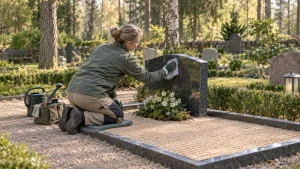
Caring for a grave gives our feelings a simple, tangible expression. Clearing away leaves, straightening a candle, placing fresh flowers — these small acts continue the care we feel for the person.
A bouquet can also become part of this personal conversation. It can express gratitude, regret, love or the memory of a happy day. You do not need a large arrangement: a few thoughtfully chosen flowers can say everything you wish to express.
Which cut flowers can you bring?
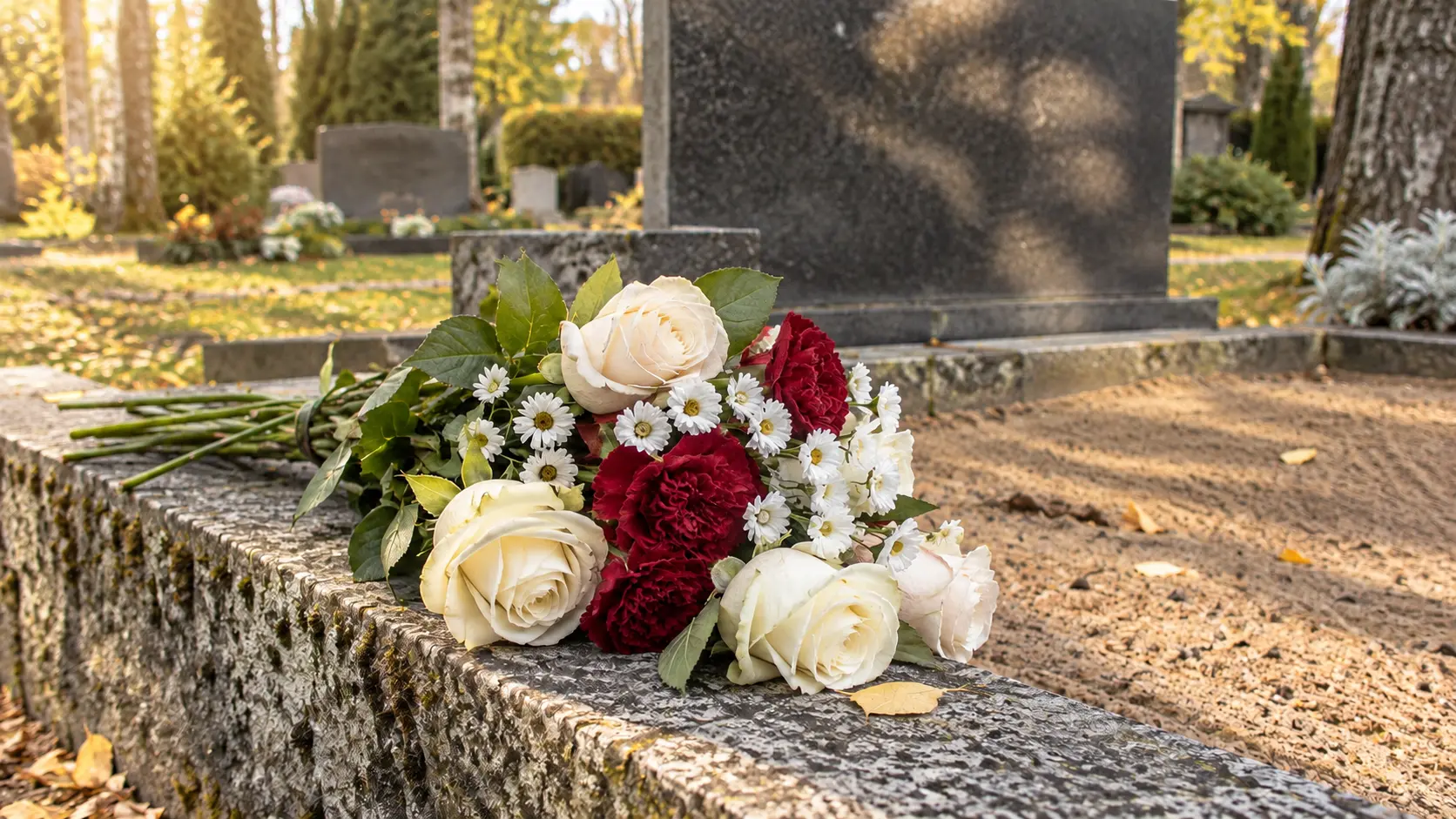
Carnations. These suit a simple, understated tribute. Red carnations are familiar at remembrance ceremonies, while white and pink varieties give a bouquet a gentler feel. You can choose them for the grave of a parent, friend or mentor, without having to divide flowers into “men’s” and “women’s” varieties.
Chrysanthemums. These come as large, single blooms on a stem or as spray varieties with many smaller flowers. They work well in both modest bouquets and fuller arrangements. White feels peaceful, burgundy lends a sense of solemnity, and yellow can bring to mind warmth and autumn.
Chrysanthemums show particularly clearly how much the language of flowers depends on context. In France and several other European countries, they are closely associated with remembrance of the dead, while in Japanese culture the chrysanthemum also carries imperial symbolism. It does not have a single, universal meaning as a “flower of death”.
Roses. You can bring roses in remembrance of love, closeness and cherished years together. White roses create a gentle, understated bouquet, while red and burgundy roses are more expressive. If the person loved pink or yellow roses, these may be the most personal choice.
Lilies. Their large blooms work well in a striking arrangement. The white lily is associated with purity in Christian art, appearing, for example, in scenes of the Annunciation. This is a cultural and religious symbol, rather than a requirement for flowers brought to a grave.
Tulips, irises, lisianthus and seasonal garden flowers. These are also suitable for a floral tribute. Tulips evoke spring, lisianthus gives an arrangement a soft, delicate shape, and irises add a striking touch of colour. Peonies or garden daisies may bring back memories of a summer cottage, a family home or a much-loved garden. Such a bouquet has its own story.
What the colour of a bouquet can mean
Colour helps convey a mood. The meanings below are best understood as possible associations that you can draw on when choosing flowers:
- White — peace, purity and fond remembrance. A suitable choice for a quiet, understated arrangement.
- Red and burgundy — love, deep affection and respect. A good choice for an expressive remembrance bouquet.
- Pink — tenderness, gratitude and warmth.
- Yellow and orange — warmth, sunshine and memories of someone full of joy.
- Lilac and purple — reflection, quiet sorrow and contemplation.
If you are unsure about combining colours, choose one main shade or pair it with white. This will give the bouquet a calm, harmonious appearance.
There is no need to avoid yellow flowers simply because of the traditional association with parting. If they remind you of your loved one, that is a perfectly understandable reason to bring them to their grave. The same applies to a bright or multicoloured bouquet: remembrance can also embrace the joy of the years you shared.
The mystical meaning of flowers and folk beliefs
It is easy to see human life reflected in a flower: it opens, reaches its full beauty and gradually fades. This cycle can suggest the fragility of life, while the return of flowers each spring can represent hope for its continuation. This is a symbolic reading of nature that everyone understands in their own way.
For a person of faith, laying flowers may be accompanied by prayer and the hope of being reunited in eternity. For someone with a secular outlook, it can be a way to maintain a connection with family history. These meanings do not require a particular flower variety or a strictly prescribed colour.
There are also unsettling superstitions surrounding cemetery flowers: that the “wrong” colour can bring misfortune, or that a bouquet which quickly wilts must be a bad omen. There is no basis for attributing such powers to flowers. Wilting depends on the condition of the plants, water, temperature and the environment in which the bouquet is left.
In Russian tradition, an even number of individual stems is usually chosen for a grave — for example, two, four or six. Customs vary between countries and families. If the number of flowers matters to your loved ones, it makes sense to take this into account out of respect for their feelings.
How to keep a bouquet looking tidy
Outdoors, flowers are exposed to sun, wind, rain and changes in temperature. There is therefore no guarantee that a bouquet left on a grave will last as long as one in a vase at home.
If there is a suitable, stable vase, fill it with clean water, recut the stems and remove any leaves that would sit below the waterline. Keep the flowers cool before your visit and do not leave them in a hot car. Access to water and protection from excessive heat help cut flowers stay fresh for longer.
For laying directly on a grave, a small bouquet is easier to position without covering the inscription. Remove unnecessary wrapping, particularly lightweight plastic that could blow away. On your next visit, remove the wilted flowers, separating them from ribbons and other decorations.
Making your choice
If you know the person’s favourite flowers, start with those. White peonies, burgundy roses or simple garden daisies may bring them to mind more vividly than any guide to flower symbolism.
If you would like an understated option, choose white chrysanthemums or carnations. Roses or lilies suit a more expressive tribute. There is no need to combine several varieties: a bouquet of just one type of flower can look complete.
If you are marking a special date, add a personal touch. For a birthday, you could bring flowers in their favourite colour; for a wedding anniversary, flowers that recall the wedding bouquet. Such a detail makes the visit especially personal.
Before buying, it can help to ask yourself: “What do I remember when I look at these flowers?” If the answer connects you with your loved one, you already have a reason for your choice.
When you cannot visit in person, you can entrust laying flowers on the grave by Angelio. Tell us which bouquet you would like us to leave and the occasion it marks — we will help you honour your loved one’s memory from afar.