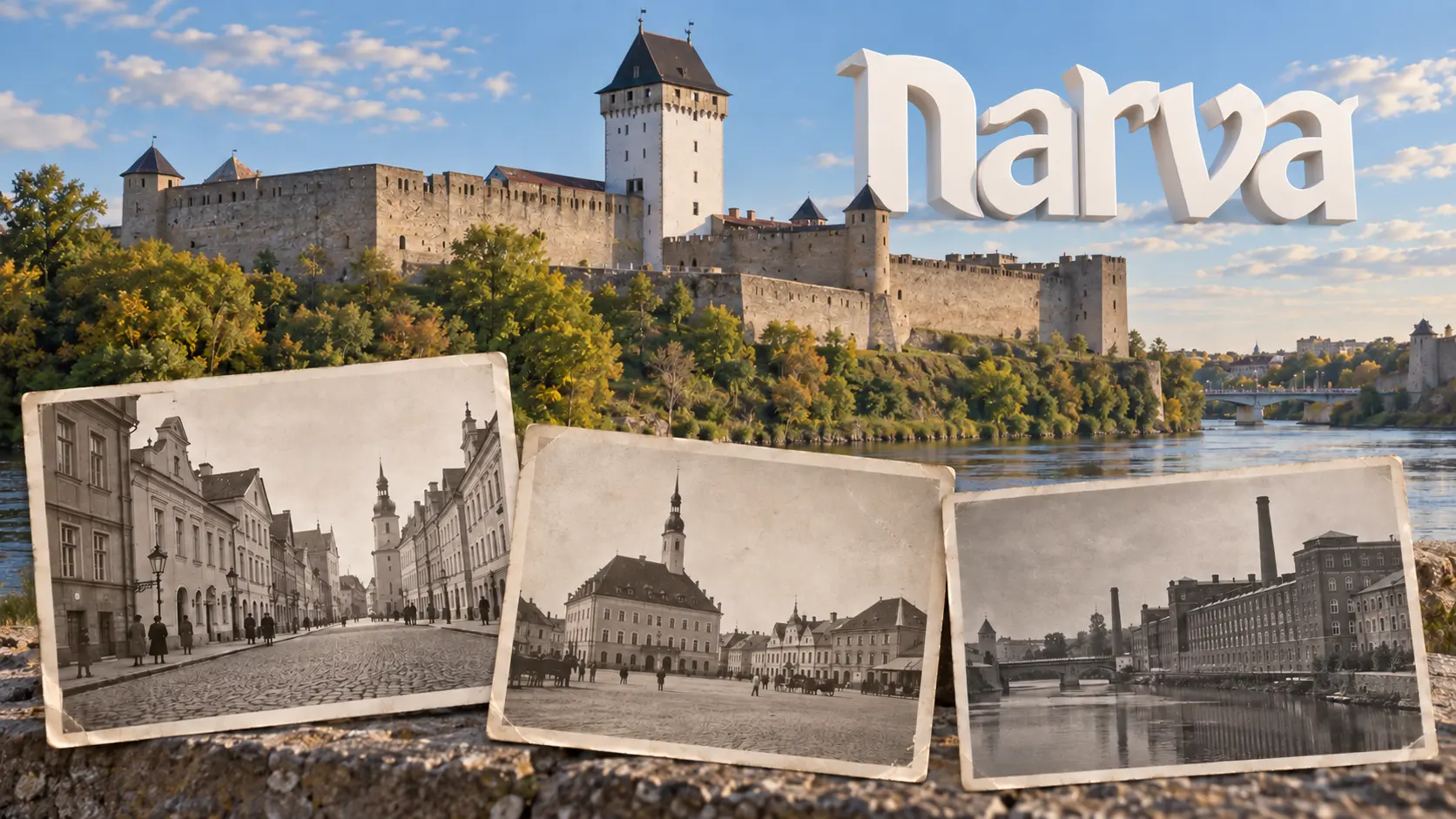
Narva is known for its castle above the river, its bastions, and the Kreenholm Manufacturing Company. However, much about the city can also be learned in its cemeteries. Preserved here are the names of people who worked in the factories, taught children, served in parishes, and participated in city life. Alongside family burials are monuments reminding us of wars, forced displacement, and the fates of different communities.
Narva’s cemeteries are very different. At some, the daily care of family graves continues, while at others, old headstones must be searched for among trees and shrubs. This overview will help you get acquainted with five places of remembrance in and around Narva, understand their features, and prepare for a visit.
Where Narva’s cemeteries are located
When speaking of Narva’s cemeteries, it is important to distinguish between the city limits and the places used by its residents. The historical Siivertsi complex is located in the northern part of Narva. The Riigiküla and Sininõmme cemeteries are located outside its borders, in the village of Peeterristi in the Narva-Jõesuu municipality.
They are connected to Narva by the burials of city residents and the family history of many Narva locals. Therefore, it is natural to include these nearby locations in the story of the city’s cemeteries.
Riigiküla Cemetery — the family memory of modern Narva
Riigiküla Cemetery near Narva is an active cemetery where mostly city residents are buried. It is located in a pine forest along the Peeterristi–Kudruküla road, between Narva and Narva-Jõesuu.
This is a vast territory with several entrances. There is a large parking lot near the main entrance, but to visit a specific grave, it is more convenient to find the closest approach in advance. In the old section, the burials are quite dense, and the passages between them are narrow in places. The new section is more spacious and faces the Riigiküla quarry.
Here it is especially noticeable how the city’s history is made up of individual destinies. Among the well-known burials are the graves of Narva cartoonist Valentin Mokievsky and Regina Birk, a doctor and athlete. For most visitors, however, the most important name at this cemetery is that of their own loved one.
In a separate article, we talk about the location of the entrances, water access, trash containers, and finding graves. Before your trip, it is useful to save the block and plot number: in a large forest area, mere memories of a nearby tree or monument may not be enough.
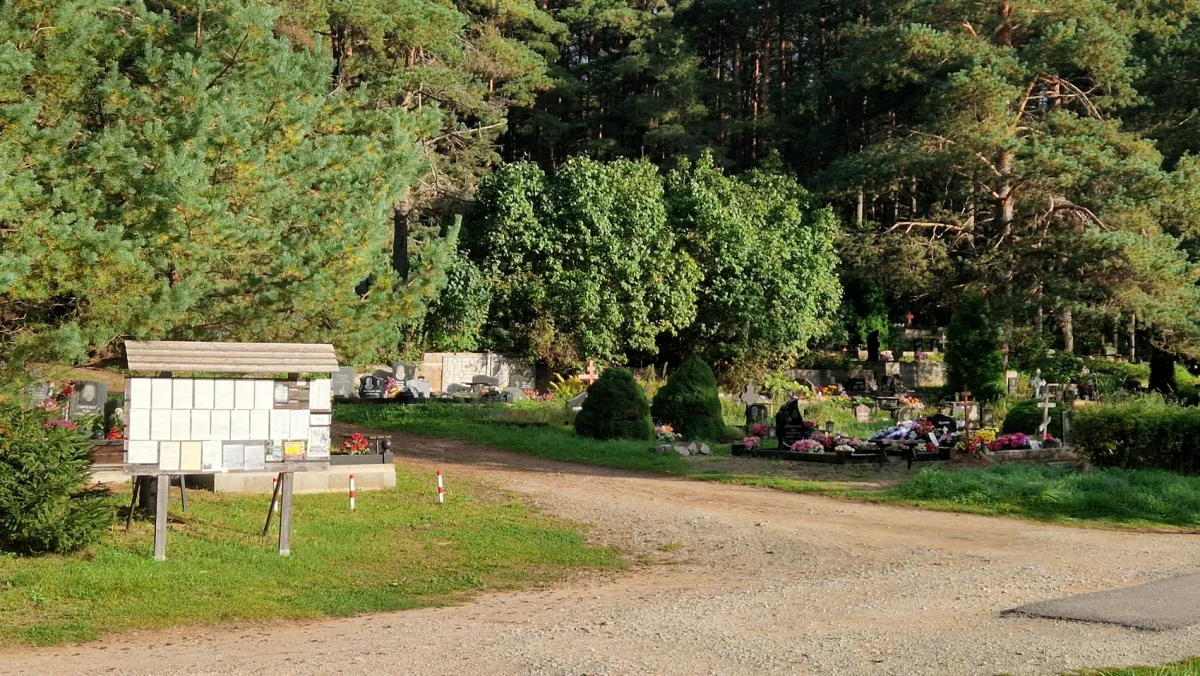
Sininõmme Cemetery and the historical memorial
Sininõmme Cemetery near Narva is also located in Peeterristi, in a pine forest. Sand hills, old burials, and a preserved chapel give this place a special character.
When visiting here, you can pay attention to the unusual old crosses and headstones. They are interesting in their shape, design, and inscriptions: sometimes a single surviving surname becomes the starting point for researching family history.
One of the main memorial sites in Sininõmme is the memorial to those who fell in the Estonian War of Independence (1918–1920). It was unveiled on July 16, 1933. The concrete obelisk featuring the Cross of Liberty survived the removal of its memorial plaques and subsequent restoration work. The monument’s history shows how attitudes toward the past have changed and how people have returned to preserving it.
The cemetery requires careful attention to walking conditions. There are sandy ascents and descents here, and convenient paths between graves are not found everywhere. For a visit, it is better to choose sturdy shoes and clarify the approach to the desired plot in advance.
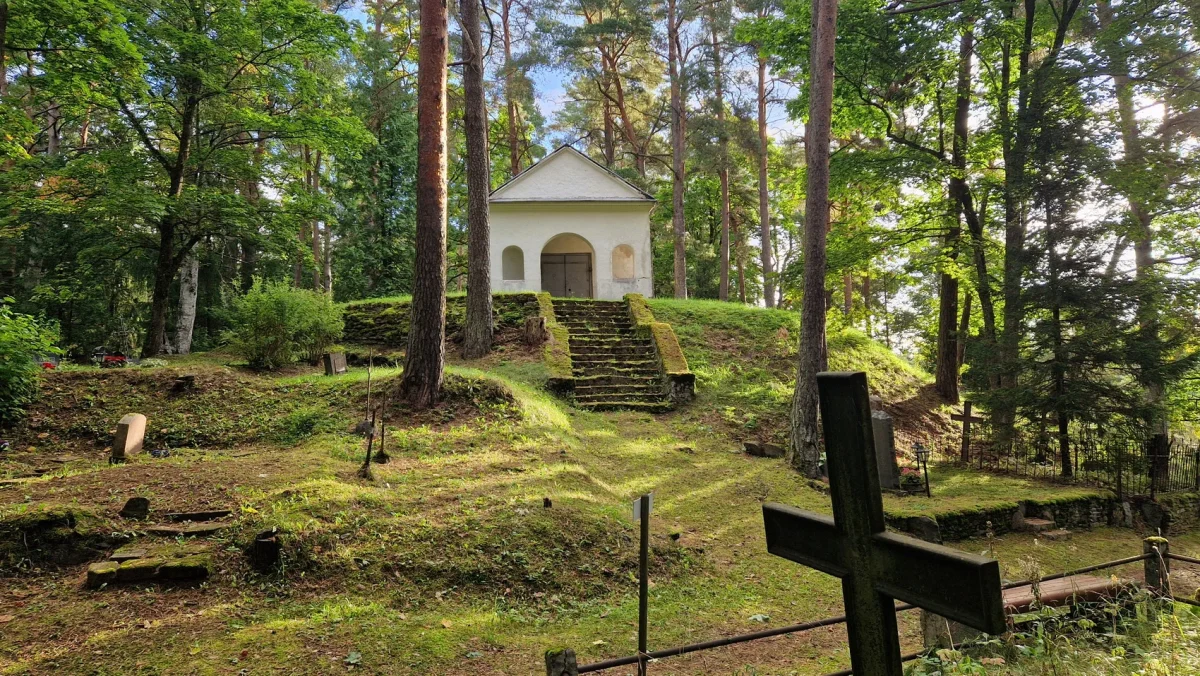
Siivertsi is several cemeteries in one historical area
Siivertsi cannot be thought of as a single cemetery with a single founding date. Rather, it developed as a complex of burial sites for different parishes and communities. Its history reflects the multilingual and multi-confessional life of Narva.
Our overviews use the names Siivertsi I, II, and III. They help to distinguish the described territories but do not replace the historical names and boundaries of the parish cemeteries. When searching for an old grave, it is helpful to know not only the word “Siivertsi” but also the name of the parish, the deceased’s surname, their years of life, and possible spelling variations of their name.
Siivertsi I or St. Peter’s Cemetery
St. Peter’s Cemetery, or Narva Siivertsi kalmistu I, is connected to the Estonian Lutheran Parish of St. Peter. Its history dates back to approximately 1866. The names Peetri kalmistu and Peetri surnuaed are also found in sources.
The memory of people who participated in the spiritual and public life of Narva is preserved here. Among the notable burials mentioned are Pastor Ferdinand Gottlieb Tannenberg, Mayor Jaan Lust, notary and politician Johan Hansing, and pastor and teacher Georg Kiviste.
Such names help you see an entire urban environment behind an old headstone: a church congregation, a school, municipal life, and families that were connected to Narva for decades.
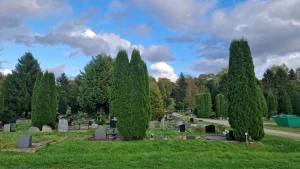
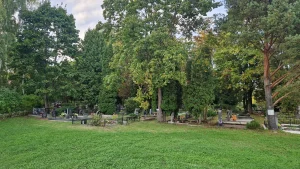
According to observations during our visit, vegetation hid some of the paths and monuments, and there was no noticeably formalized entrance. Therefore, it is better to plan a visit to St. Peter’s Cemetery without rushing, during daylight hours. Old crosses and leaning headstones should be inspected carefully, without leaning on them.
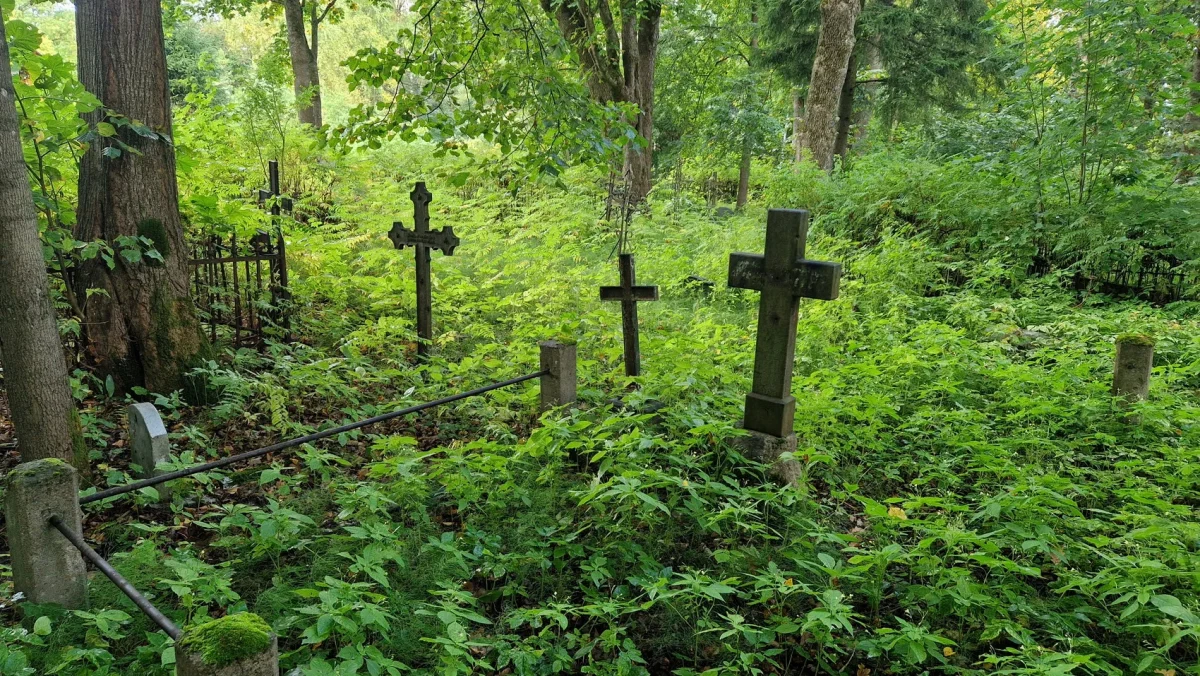
Siivertsi II and the memory of Latvian refugees
The area described in the article about Siivertsi II Cemetery and the Latvian Memorial holds the memory of people brought to Narva, far from home, by the First World War. The location of the memorial is connected to the historical St. John’s Cemetery — Jaani kalmistu.
The main landmark here is the monument over the mass grave of Latvian refugees. It was erected in 1934, using a boulder from the banks of the Daugava River. The image of a grieving woman and Latvia’s dedication to its children convey the personal side of a great historical tragedy.
Narva was a place where these people sought refuge from the war. The memorial reminds us that the city’s history also includes the fates of those who ended up here involuntarily.
Our detailed material also talks about the historical burials of St. John’s Cemetery, including the British specialist at the Kreenholm Manufactory, Walter Shawcross, and the von Pott family. At the same time, the exact boundaries of the area designated as Siivertsi II should not be automatically applied to the entire historical cemetery.
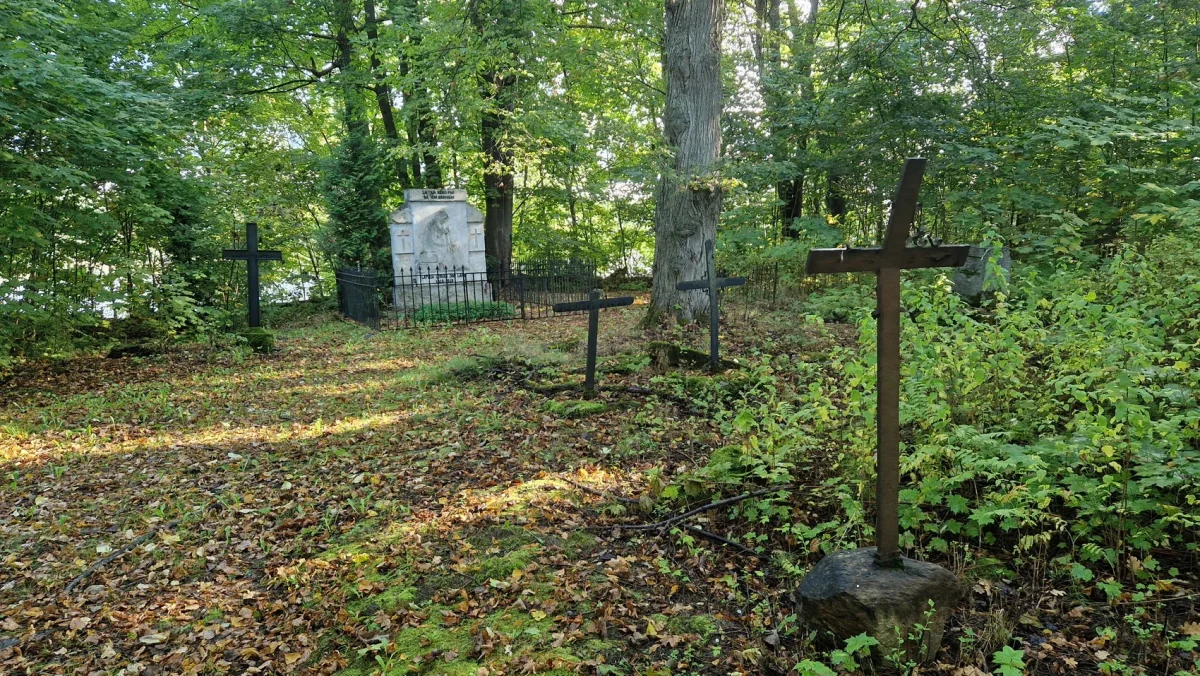
Siivertsi III — old burials
Another part of the complex is presented in the article about Siivertsi III Cemetery and the grave of Amalie Kreisberg. Here, Narva’s history is closely tied to Kreenholm and the working life of the city.
Amalie Elisabet Kreisberg worked in the weaving department of the Kreenholm Manufactory and participated in the labor movement of 1905. Following her arrest, she died in custody in Yamburg in 1906, at the age of 26.
Her burial reminds us that behind the history of a large enterprise stood specific individuals — with their hopes, hard work, and desire to change living conditions. In the spring of 2026, local enthusiasts tidied up the grave, cleaned the monument, and planted flowers.
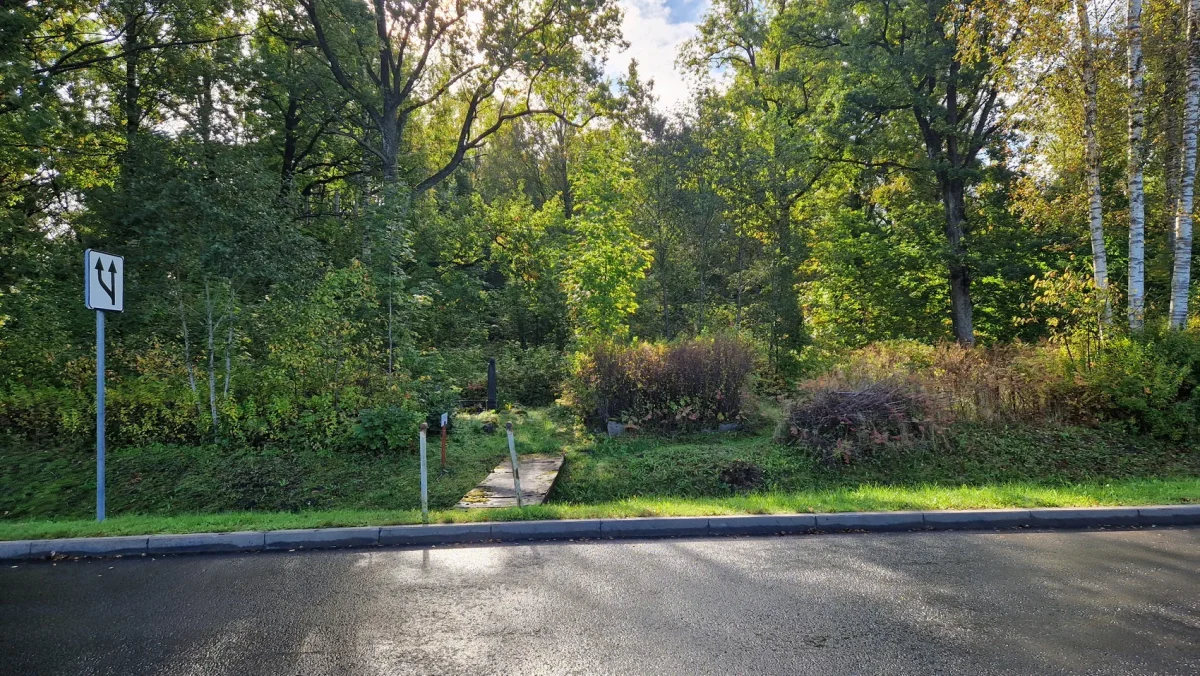
According to observations during our visit, part of the territory is heavily overgrown with trees and shrubs. Therefore, you shouldn’t expect a leisurely walk along smooth paths here. When searching for a specific grave, photographs and exact landmarks will come in particularly handy.
How to prepare for a visit
First, determine the purpose of your trip. For tending to a family grave, the nearest entrance, access to water, and distance from the parking lot are important. For getting to know a historical cemetery, you need information about the monuments, comfortable shoes, and time for an unhurried look around.
If you are looking for a relative, gather everything that is already known: full name, dates of life, old photographs, parish name, plot number. On the headstone and in documents, the surname may be spelled differently. The lack of a result in an electronic search does not necessarily mean the grave does not exist.
In older sections, it is better to stick to existing pathways and not attempt to lift fallen headstones yourself. When photographing monuments, respect the personal space of people visiting their loved ones.
Care for graves and preserving Narva’s history
Cemeteries preserve the part of history that consists of names, family ties, and personal memories. Tending to a single burial helps preserve a small fragment of the entire city’s past.
Clearing away branches, removing fallen leaves from the plot, bringing flowers, or writing down a still-legible inscription — these are manageable ways to show attention to this heritage. They become especially valuable where relatives have long since moved away or can no longer visit on their own.
Angelio assists with finding burials and grave care services in and around Narva. If you need help, let us know the name of the cemetery, any known information about the burial, and attach photos if possible. This will allow us to discuss a site visit and the necessary work.