The cemeteries in and around Jõhvi preserve the memory of several generations of Ida-Virumaa residents. Here, modern monuments stand alongside old crosses, while family plots bring together the names of people who lived in different eras. For some visitors, these are places to connect with the region’s history; for others, they offer a quiet moment to remember loved ones.
In this overview, we introduce three cemeteries: Jõhvi, Raudi and Illuka. They differ in size, location and character, so learning about each one can help you plan your visit.
Where to find the cemeteries in and around Jõhvi
Jõhvi kalmistu is located in the town of Jõhvi. Raudi kalmistu and Illuka kalmistu lie outside the town, in Alutaguse Municipality, towards Kuremäe.
This overview therefore covers both Jõhvi Cemetery and nearby burial grounds. When looking for a grave, it is important to establish the exact cemetery name: knowing that someone was “buried near Jõhvi” may not be enough to identify the right cemetery.
Jõhvi Cemetery — family plots and a modern columbarium
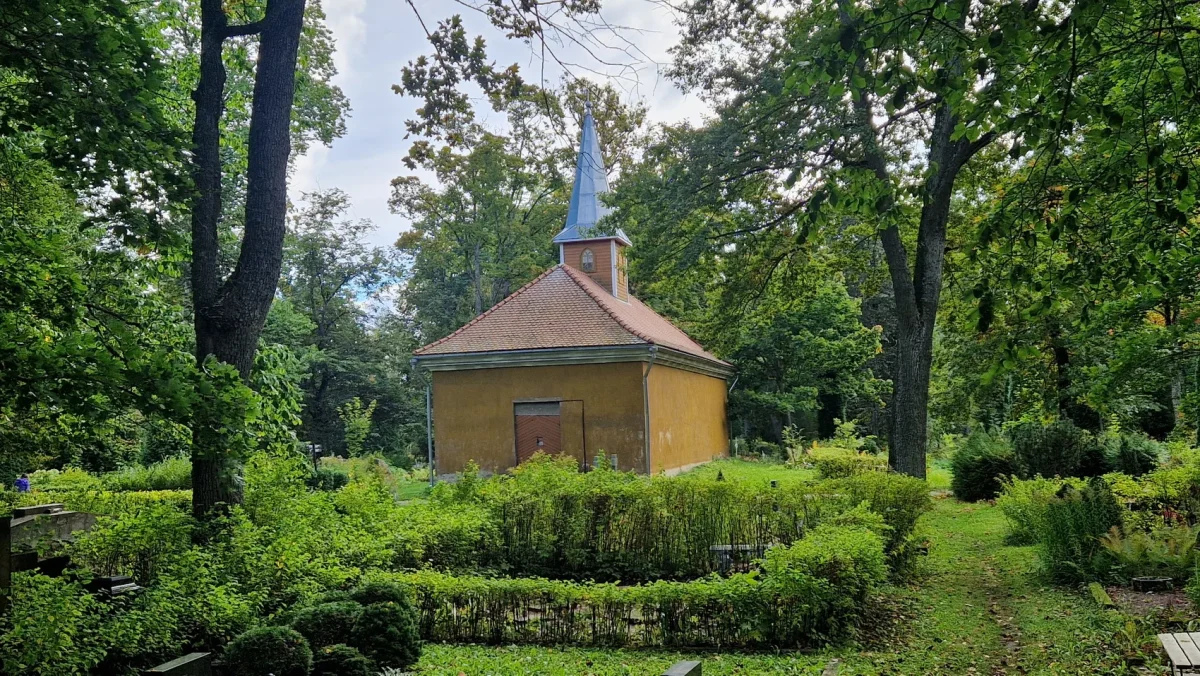
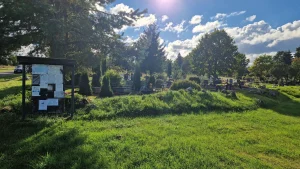
Jõhvi Cemetery — Jõhvi kalmistu is a large cemetery still in use, situated along a road leading out of town. Its grounds contain both old and recent graves, small crosses, traditional headstones and large stone monuments.
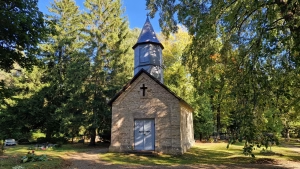
The cemetery has several access points, so the most convenient route depends on where the grave you wish to visit is located. There is a small chapel on the grounds, along with waste containers that visitors can use when tending graves.
A modern feature of the cemetery is its columbarium — a structure with niches for urns containing ashes. Its orderly layout differs from the older family plots and reflects changing approaches to places of remembrance.
Our dedicated article about Jõhvi Cemetery provides more information about access routes, paths, the columbarium and finding graves.
Raudi Cemetery — a place of remembrance amid a pine forest
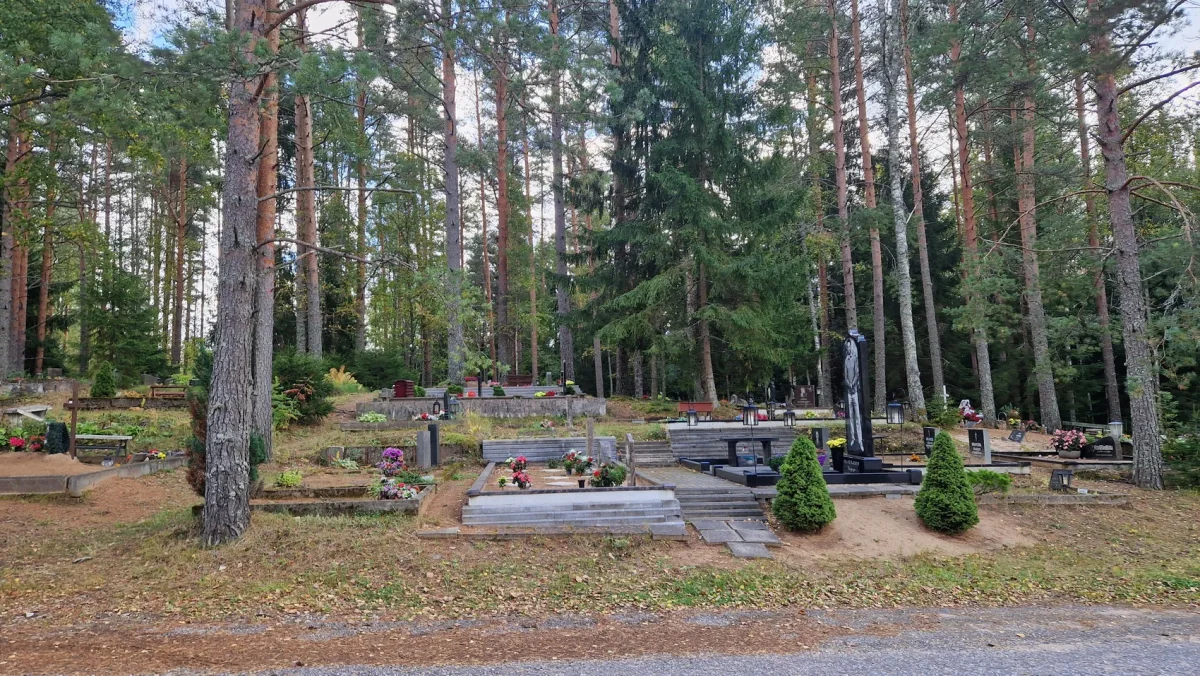
Raudi Cemetery — Raudi kalmistu is located in the village of Konsu, in Alutaguse Municipality, on the road towards Kuremäe. Pühtitsa Convent is nearby, and the cemetery itself is surrounded by a pine forest.
Raudi is a large cemetery still in use. Old family graves stand alongside more recent burials. The memorials vary considerably in design, from modest slabs and crosses to tall stone headstones bearing portraits of the deceased.
Several access roads lead to the cemetery, and there is a large parking area in its central section. Before visiting, it is useful to check which entrance is closest to the grave you are looking for: on such extensive grounds, relying on memory alone can make the search time-consuming.
You can find details about the location, access routes and finding graves in our article about Raudi Cemetery.
Illuka Cemetery — old crosses and the history of local families
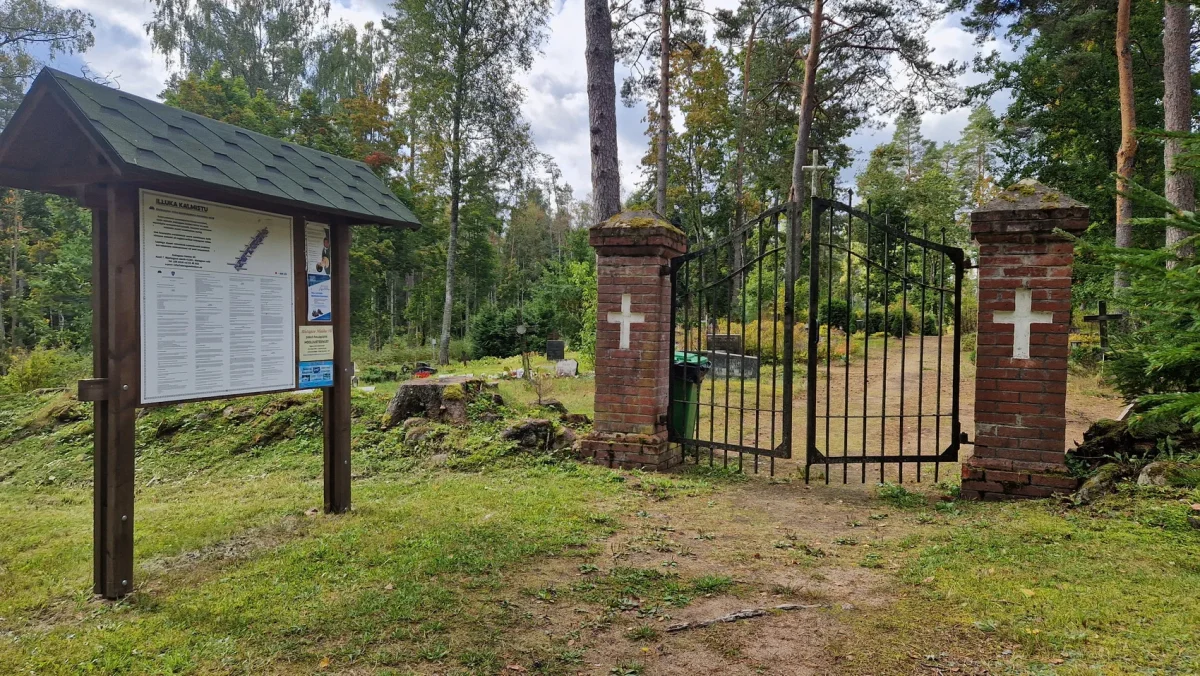
Illuka Cemetery — Illuka kalmistu is located in the village of Illuka, in Alutaguse Municipality, beside the Lutheran church. It is a small historic cemetery on the road towards Kuremäe.
The neighbouring church adds to the historic character of the site. Here, the memory of local families is closely intertwined with the life of the community.
The cemetery has several entrances, convenient paths between the graves and waste containers. Its more open grounds have a different character from the forest setting of Raudi Cemetery.
In our dedicated article about Illuka Cemetery, we discuss its location, old graves and how to find a burial site.
How to find a relative’s grave
Before starting your search, gather any information you have: the deceased’s first name and surname, dates of birth and death, the likely cemetery, old photographs of the headstone and any records of the plot number.
You can try looking for burial information in an online cemetery register. If the search returns no results, check alternative spellings of the first name and surname. Older documents may contain errors, abbreviations or differences between Russian and Estonian spellings.
The absence of an online record does not necessarily mean that the grave does not exist. Relatives or the cemetery administration may have additional information. Photographs of neighbouring headstones and precise landmarks are particularly useful when searching on site.
Grave care in and around Jõhvi
Caring for a family grave helps preserve the memory of loved ones. Removing leaves and branches, clearing weeds, tending the headstone and laying flowers are simple acts that keep a place of remembrance well cared for.
If you live far away or are unable to visit in person, Angelio can help find a burial site and provide grave care at Jõhvi, Raudi and Illuka cemeteries.
Tell us the cemetery name, share any information you have about the grave and, if possible, attach photographs. We will discuss the work required, arrange a visit and provide a photo report once the work is complete.