Sillamäe is usually known for its seaside character: walks along the waterfront, its streets and the architecture of the town centre. But the town also has another, more personal history. It lives on in family photographs, memories of loved ones and inscriptions on graves.
To explore this history, you need to travel beyond Sillamäe towards the settlement of Sinimäe. Several cemeteries lie close together here, each with its own name and character. Some are primarily places where families visit their loved ones’ graves; others preserve traces of old Vaivara, wartime destruction and the restoration of memorial sites.
Where are the cemeteries near Sillamäe?
This overview covers four cemeteries near Sillamäe: Sillamäe Cemetery, Sinimäe Cemetery, Vaivara New Cemetery and Vaivara Old Cemetery. They are located around the settlement of Sinimäe, in Narva-Jõesuu municipality, Ida-Viru County.
Their proximity can sometimes make searching difficult. Family conversations may refer simply to “the cemetery near Sillamäe” or “in Sinimäe”, although an exact name is needed to plan a route and find a burial record. These neighbouring grounds should not be treated as a single cemetery.
Before travelling, it is useful to check the cemetery’s name against its Estonian equivalent. Sillamäe kalmistu is Sillamäe Cemetery, Sinimäe kalmistu is Sinimäe Cemetery, Vaivara uus kalmistu is Vaivara New Cemetery, and Vaivara vana kalmistu is Vaivara Old Cemetery.
Sillamäe Cemetery
Sillamäe Cemetery — Sillamäe kalmistu is located beside the settlement of Sinimäe, next to Vaivara New Cemetery and Sinimäe Cemetery. It has a separate listing on Kalmistud.ee.
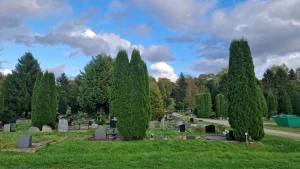
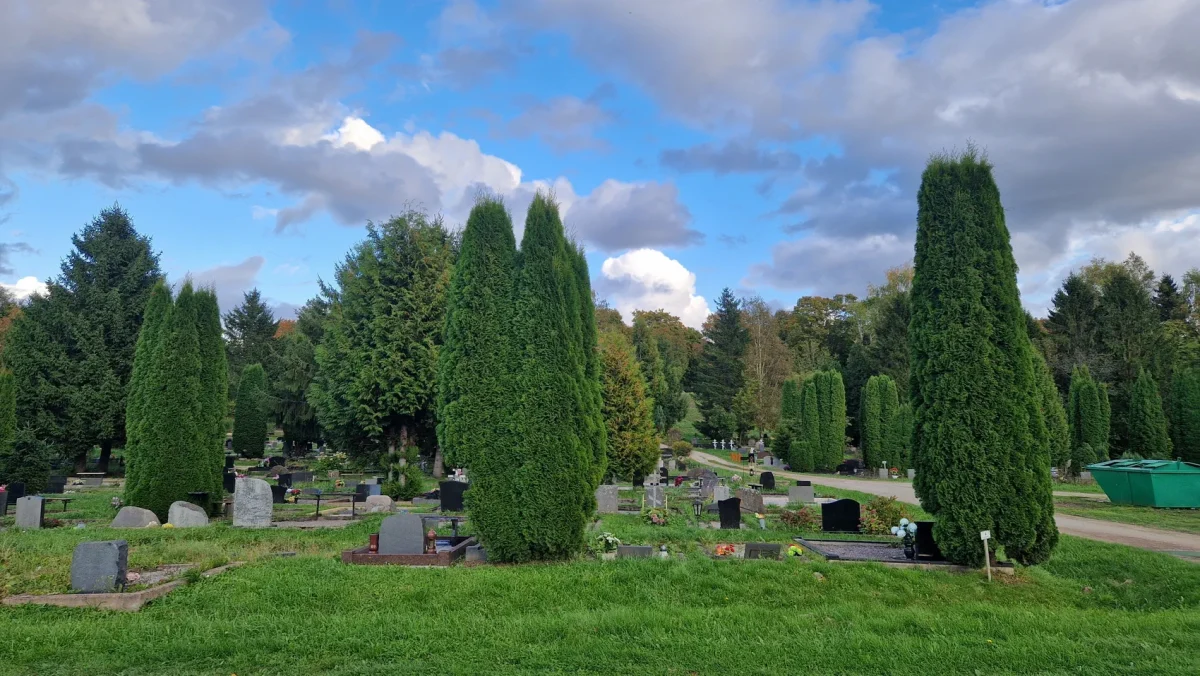
One of its distinctive features is the open space. There is no dense woodland, so the grounds feel bright. Thuja plantings stand out among the headstones, providing a green border around the plots.
During our visit, we found it easy to move around, with paths provided between the graves. Several roads lead to the cemetery and meet in its central area. Checking the location of the grave beforehand can help you choose a more convenient approach and shorten the distance you need to carry flowers, water or tools.
At the time of our visit, there was a water tank for watering plants and a waste container. There are no buildings or chapels on the grounds. Our separate article provides location details, photographs and information on finding a grave.
Sinimäe Cemetery
Sinimäe Cemetery — Sinimäe kalmistu lies on the outskirts of the settlement of the same name. The Vaivara cemeteries are nearby, so when searching for a relative, it is particularly important to check which cemetery a record or an old set of directions refers to.
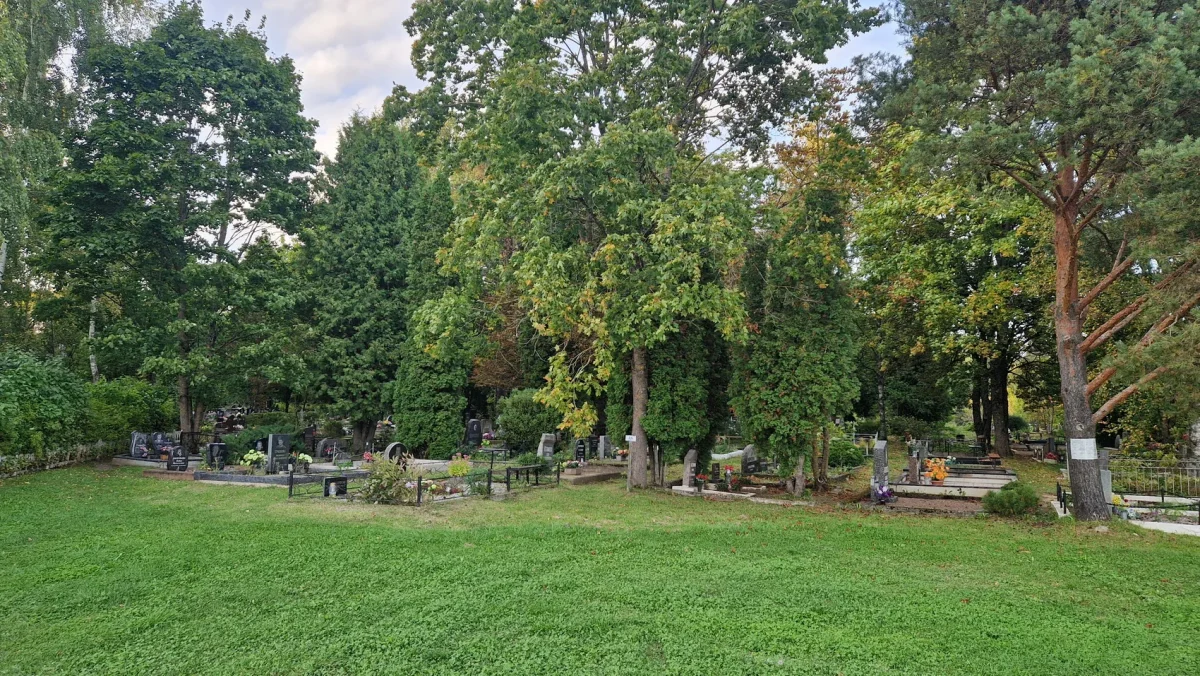
During our visit, Sinimäe appeared more crowded than the neighbouring Vaivara cemeteries. Graves are close together, with narrow passages between some plots. It is worth planning your route to the grave in advance, especially if you intend to clean it or bring maintenance materials.
The cemetery contains a memorial to Soviet soldiers of the Second World War and collective graves. These places of remembrance reflect the wartime history of the surrounding area, alongside the personal memories of local families.
Our article includes information about the Haudi system and the cemetery map to help with grave searches. Save any record you find before setting off: the name, dates of birth and death, and plot number will help you find your way on arrival.
Vaivara Old Cemetery
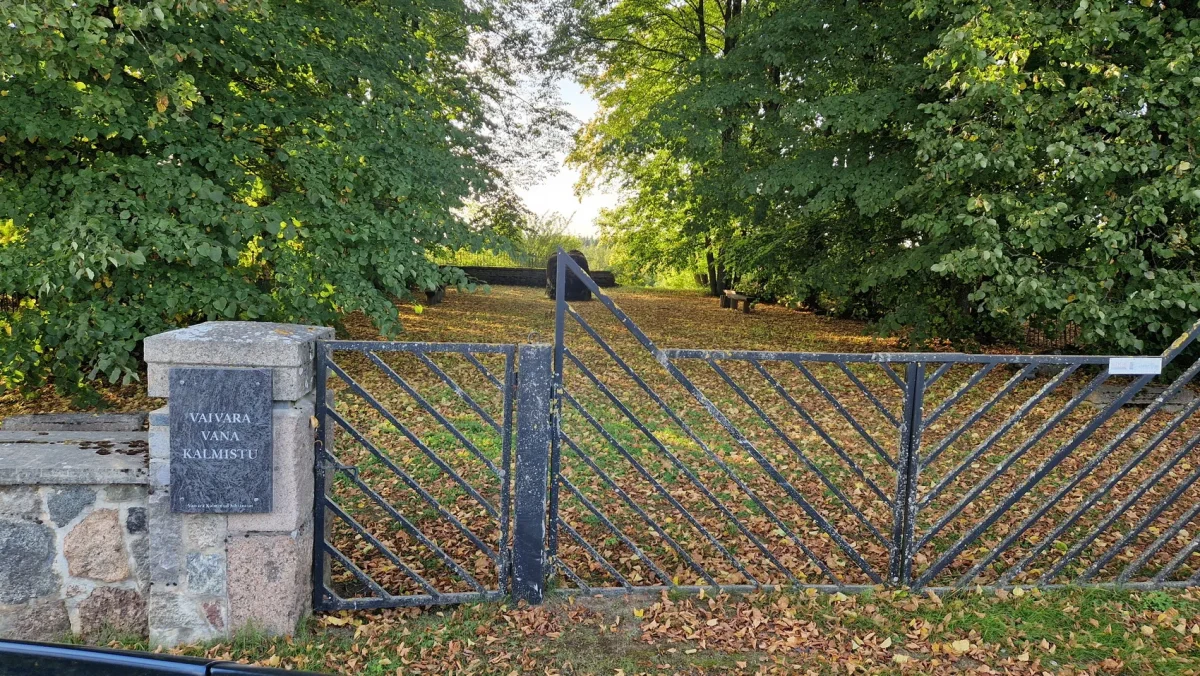
Vaivara Old Cemetery — Vaivara vana kalmistu offers a glimpse into the area’s past long before Sillamäe took on its modern appearance. Burials began here in 1782. The cemetery served the local parish and families living in Vaivara.
The fighting of 1944 dramatically changed its fate. A defensive line ran through the grounds, where trenches and bunkers were built. The chapel, boundary wall and most headstones were destroyed during the fighting. After the war, the cemetery gradually became overgrown; more extensive work to improve the grounds began in 1986.
Today, an important feature is the memorial wall created on the initiative of Arvo Puu. It was formally inaugurated on 2 July 2000. Its plaques commemorate those who died in the Second World War and people connected with Vaivara. The history of the destroyed church and its pastors is presented separately.
When reading inscriptions, remember that a memorial plaque does not necessarily mark a burial place. A name on a memorial may commemorate someone buried elsewhere. This is an important distinction when searching for a family grave.
Vaivara New Cemetery
The name Vaivara New Cemetery — Vaivara uus kalmistu may suggest that it was established recently. In fact, burials began here in the early 20th century, when the old cemetery was running out of space. “New” simply means that it was established later than the old cemetery.
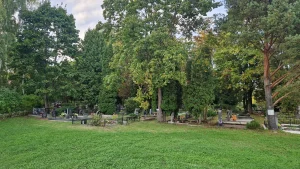
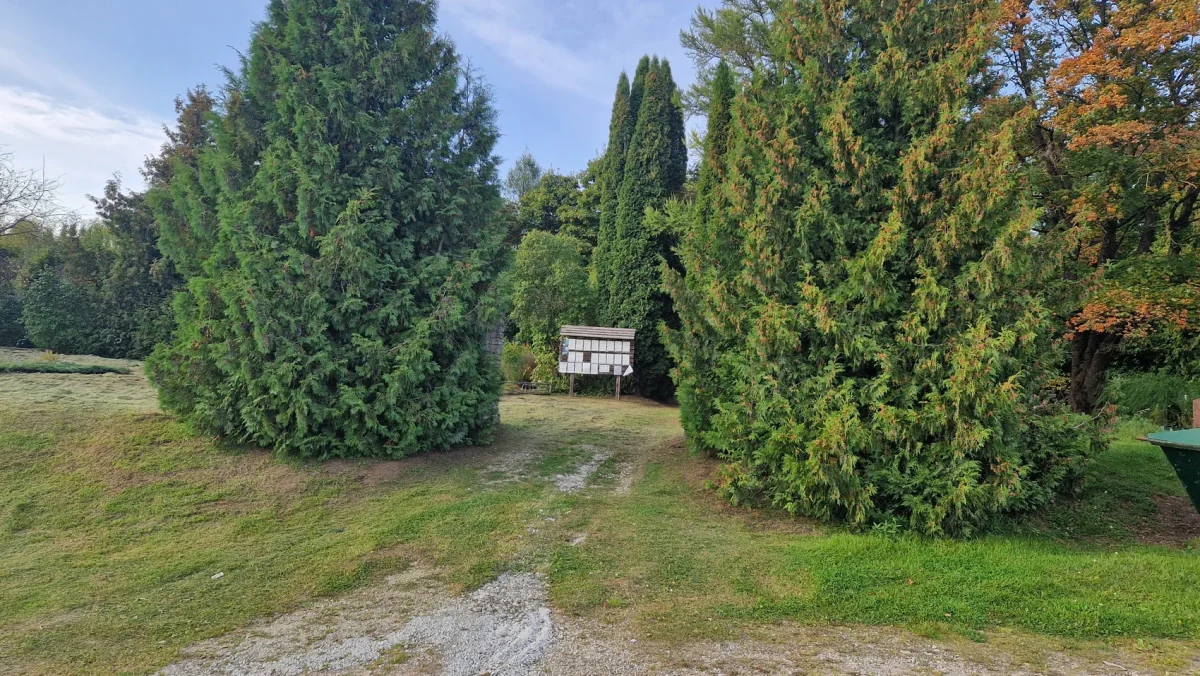
Graves more than a hundred years old survive here. During our visit, we found the cemetery spacious and peaceful, with many well-tended family plots. The older headstones bear Estonian inscriptions, spellings unfamiliar to modern readers and epitaphs expressing the sorrow of loved ones.
One of the main historic features is the memorial to Vaivara residents who died in the Estonian War of Independence of 1918–1920. Created by sculptor Voldemar Mellik, the monument was unveiled in 1924, destroyed in 1940 and restored in 1991.
The monument is topped by a sculpture of a father holding his dying son. This image conveys the human cost of wartime loss. Plaques on the sides of the base bear the names of 25 fallen residents of Vaivara.
How to find a grave near Sillamäe
Start by identifying the cemetery. Gather the deceased’s full name, dates of birth and death, old photographs of the headstone and any information about neighbouring graves. Even a small detail from a family story may prove useful, but it should be checked against maps and documents.
Graves at Sillamäe and Sinimäe Cemeteries can be searched through the Haudi system. If a surname produces no results, try alternative spellings in Cyrillic and Latin letters, and check that you have selected the correct cemetery. The absence of a search result does not, by itself, prove that the grave does not exist.
Our article describes a different approach for Vaivara Old Cemetery: it is not connected to Haudi, so enquiries should be directed to the local authority. Wartime destruction adds to the difficulty of searching: a grave may have existed even if its headstone has not survived.
What to consider before visiting
Plan your approach to the specific plot, rather than relying solely on the cemetery marker in your navigation app. Conditions differ between open grounds and closely packed rows of graves, so comfortable footwear and a saved map can make your visit easier.
If you plan to clean the grave, bring gloves, a soft brush and bags for collecting rubbish. Check in advance whether water is available and where you can collect it. In historic sections, do not lean on old crosses or attempt to move heavy or damaged headstones yourself.
You can photograph surviving inscriptions and add them to your family archive. Be sure to distinguish between clearly legible text and guesses: a single incorrectly interpreted letter can sometimes lead further research in the wrong direction.
Honouring the memory of loved ones
Each of these cemeteries has its own character. Sillamäe is memorable for its open grounds and thuja trees, Sinimäe for its neighbouring family and military graves, Vaivara New Cemetery for its historic monuments, and Vaivara Old Cemetery for its traces of destruction and names brought back from obscurity.
For a family, the most important of these places is simply the one where a loved one rests. Visiting, tidying the plot, leaving flowers or preserving a relative’s story are all ways of maintaining a connection between generations.
Angelio helps with grave searches and gravestone cleaning in Sillamäe and the surrounding area. If you live far away or cannot visit in person, tell us the cemetery’s name and what you know about the grave. Include photographs or a plot number if available — this will help us discuss a search, one-off cleaning or regular care.